

Studio
Material, Structure and Sensory Perception
Studio
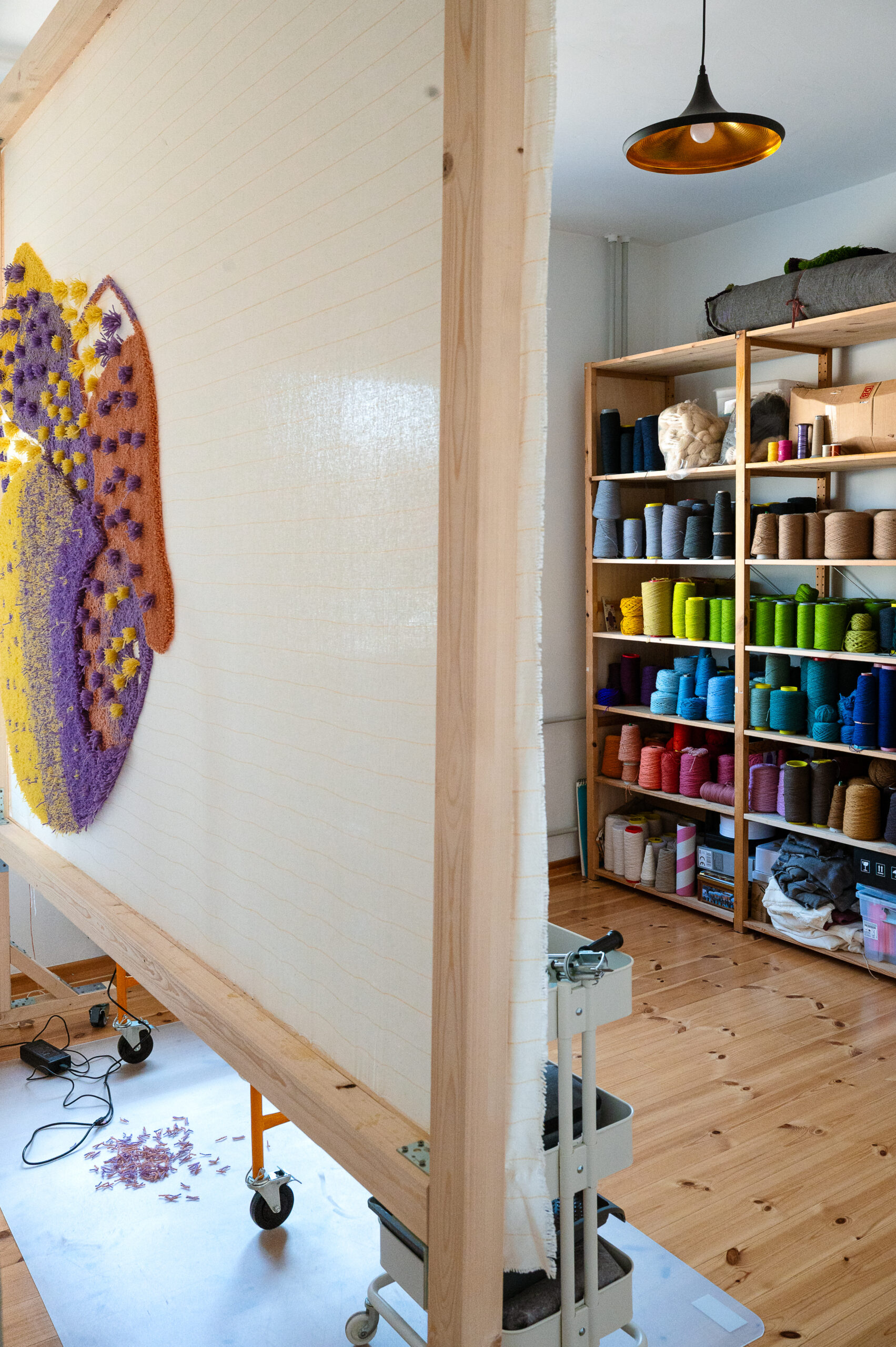
The foundation of my studio emerged during my textile design studies with Wundernetz, my first tufted rug. This sparked an ongoing exploration of material, surface, and spatial presence.
In the years that followed, further works and experiments developed, focusing on recycled wool, reliefs, and contrasting yarn qualities.
Presenting two of my works at SaloneSatellite in Milan in 2024 marked a pivotal moment, encouraging me to pursue my practice as an independent studio.
Following my graduation, I dedicated myself to building my independent business, balancing conceptual development, founder programs, and establishing my own workflow. With the support of a founder’s prize, I was finally able to open my studio in Leipzig in 2026.
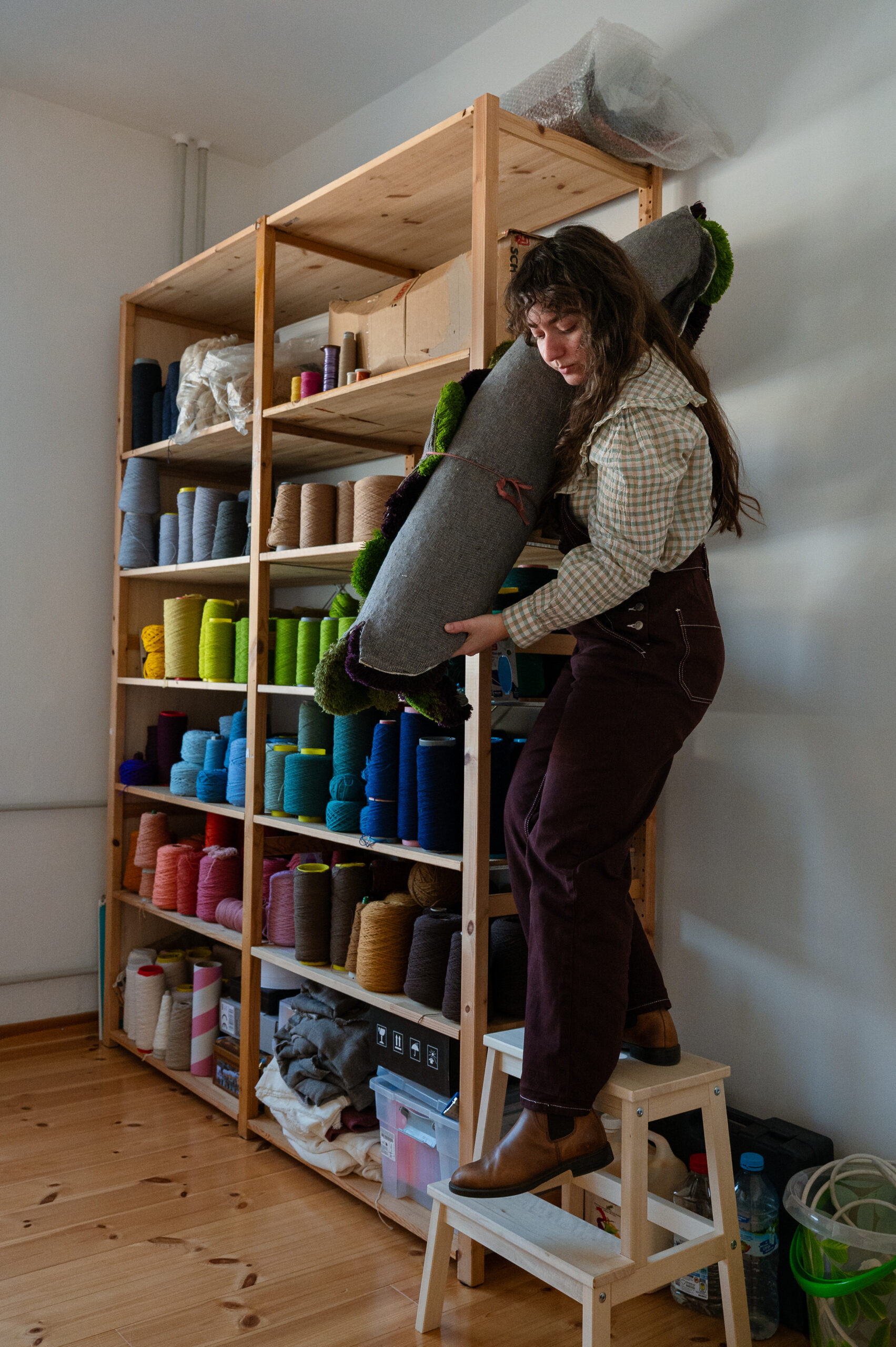
Today, my practice moves between two environments: the workshop and the office—balancing hands-on craftsmanship with the growth of the studio.
Material, Structure and Sensory Perception
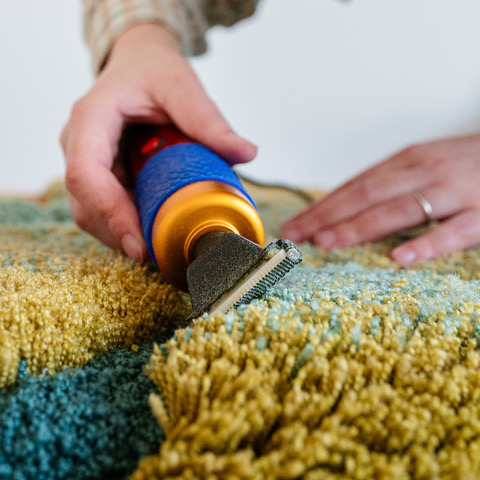
Tufting serves as a tool for me to develop complex, tactile surfaces.
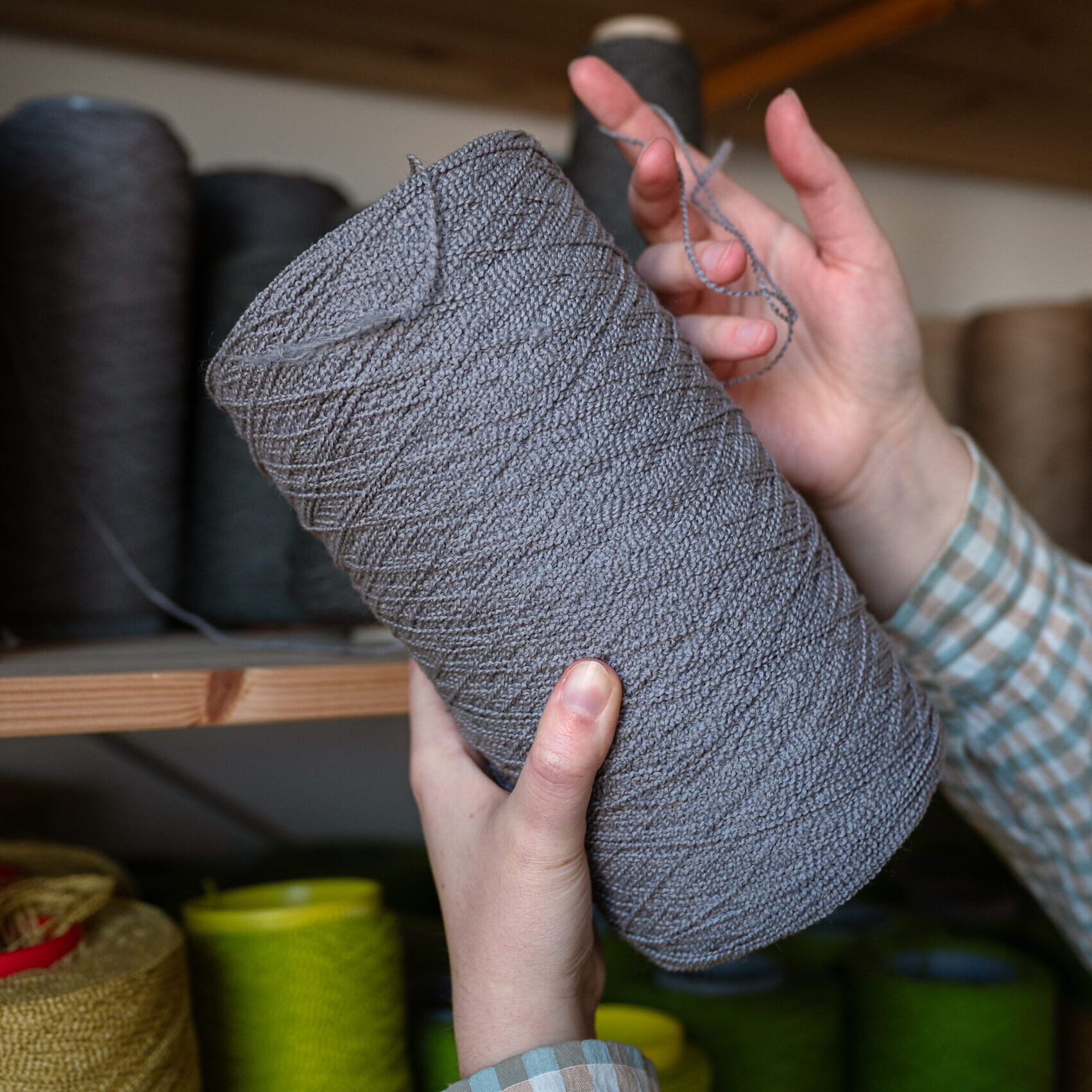
I combine fine novelty yarns, used in multiple strands, with thicker knitting yarns from local manufactures and textured New Zealand wool.
These contrasts create tension within the surface—between softness, density, and relief.
Pile height, compression, and yarn placement are intentionally utilized to generate a distinct spatial presence.
The works respond to light and perspective, revealing themselves through proximity.
Tactility is a central component here. Different surfaces and resistances invite the viewer to perceive the work not only visually, but physically.
Each piece is crafted individually.

Inspiration
The formal starting points emerge from observations of nature and landscape.
Structures, growth patterns, and transitions are not directly replicated, but rather translated into textile systems.
Series like the Apulia works draw on elements of southern flora and landscape, transforming them into abstracted surfaces.
Material and Responsibility
The choice of natural materials is central to my practice.
I prefer working with wool, increasingly shifting my focus toward industrial surpluses and reclaimed materials.
This choice is also a response to the conditions of textile production. Synthetic fibers are widespread, yet hardly degradable and place a long-term burden on ecosystems.
Natural materials, on the other hand, stand in direct relation to their origin and change over time.
My work is conceived as an approach to these interconnections—between observation, material, and the fragility of natural systems.